For a long time, a simple principle applied in many companies: those who lead set requirements, control and correct. In manageable, stable conditions this worked. Today this model is reaching its limits. Tasks are becoming more complex, knowledge is distributed across many heads, and decisions have to be made faster than any control loop allows. Managers can no longer know, check and approve everything. The decisive question is therefore not how to control more, but how to lead an organisation so that people act responsibly of their own accord.
Leading as fiduciary responsibility
Stewardship answers this question with an attitude. A steward is a guardian: someone who has been entrusted with something and wants to pass it on in better condition than they received it. Applied to leadership, this means understanding a company, a team or a task not as property or a stage, but as responsibility for a limited time.
Those who lead in this way think beyond the next quarter. They ask not only what a decision brings today, but what it means in the long term for people, the organisation and future viability.

The view of human nature is decisive
Every leadership style is based on an assumption about people. Those who assume that employees only perform under supervision build controls, reports and approvals, and create exactly the behaviour they expect: working to rule and covering oneself instead of initiative.
Stewardship assumes the opposite. Most people want to do good work, take on responsibility and make a meaningful contribution. Leadership has the task of creating the conditions for this. This view of human nature is not naive, but has been confirmed again and again in practice: trust that is well founded is usually returned.
Trust needs a framework
Leading through trust does not mean doing without steering. It means steering differently. The basis is a clear purpose that gives everyone orientation, and a reliable framework of roles, decision rights and agreed goals.
Within this framework, people make decisions independently. Leadership does not check every step, but the impact. Trust and clarity are therefore not opposites, but depend on each other: the clearer the framework, the more trust is possible.

Leading means enabling
In this understanding, the role of the manager shifts. They are less the one who decides everything and more the one who shapes conditions. They enable, clear obstacles out of the way, provide resources, give honest feedback and stand behind their people, especially when something goes wrong.
This requires self-confidence and the willingness to give up control. But it also brings relief: those who do not have to make every decision themselves gain time for the questions that really need leadership.
Impact that lasts
The real measure of stewardship leadership shows beyond one's own term of office. Has the organisation gained strength? Have people grown, have successors been developed, has knowledge been secured? Does the organisation remain able to act when the manager leaves?
Those who can answer these questions with yes have led in the sense of a steward. This has always been a matter of course in family businesses that think in generations, and it becomes a competitive advantage for every organisation that depends on reliable people in uncertain times.
Conclusion
Control secures today. Trust within a clear framework creates an organisation that will hold tomorrow too. That is the core of stewardship leadership.
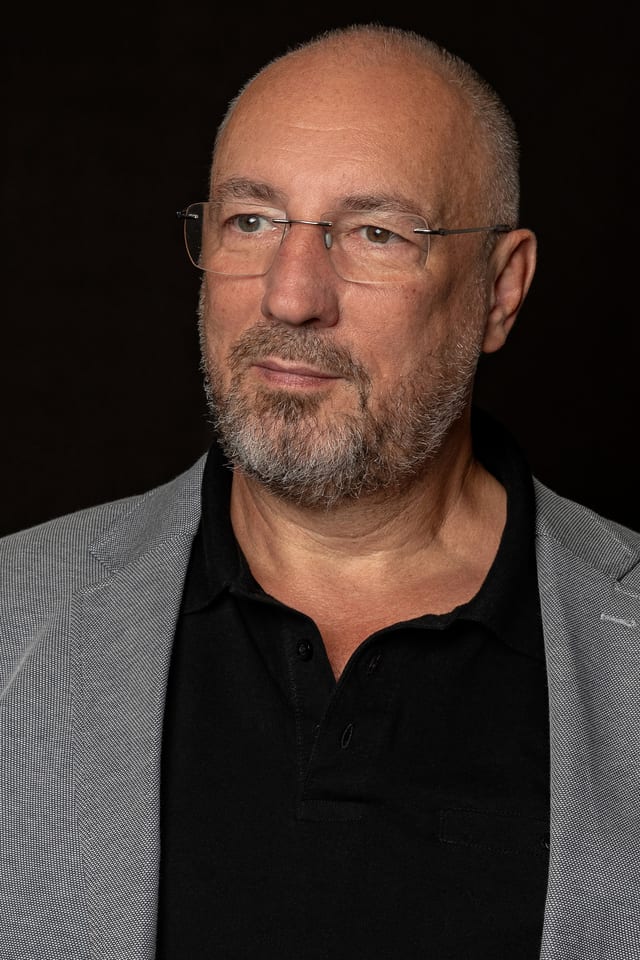
An article by Johann Spies, SPIES CONSULT. More about our approach: Stewardship: our attitude and Enable & trust.
Image credits
- Cover image, single tree in the morning mist: photo by Doncoombez on Unsplash
- Old tree, grown over generations: photo by Mihály Köles on Unsplash
- Stone bridge that has held for generations: photo by Heather Hintze on Unsplash
Rethink leadership?
Write to us about where you stand, and together we will develop leadership that is carried by trust.
Arrange a meeting